The Bronx
We would like to continue our brief historical background with the formation of the northernmost borough and (except for a tiny sliver
of Manhattan) the only part of New York on the mainland-The Bronx. It is south of Westchester County; northeast and east of Manhattan, across the Harlem River; and north of Queens, across the East River.

We need to mention that the Bronx was first
settled by farmers, so for centuries it remained rural. Originally tied to
Manhattan only by the King’s Bridge across the Spuyten Duyvil Creek, it
was the scene of much conflict during the American Revolution,
but afterward it became the area where wealthy politicians and
merchants established summer homes. It shows us, that at that time, the main population was American. Railroads, additional bridges, and commerce
gradually bound the Bronx to the lower city, and in 1874 the towns of
Morrisania, West Farms, and Kingsbridge were annexed by Manhattan. At that time, the territory of the Bronx was divided by the Bronx River into a hillier section in the west, and a flatter eastern section. This parts were quiet independant, and it was demonstrated by their annexion to New York. The West Bronx was annexed to New York City in 1874, and the areas east of the Bronx River in 1895. When additional land from the
Bronx was added to New York in the consolidation of 1898, the modern
borough was created. Prior to 1910 subway lines snaked their way north
to facilitate population growth in the former farmland.
By the time
Bronx county was established in 1914, it had large groups of Italians,
Jews, Irish, and Armenians. Many found work on public works projects, such as those that built parks, the Bronx Zoo, the New York Botanical Garden, or the Jerome Park Reservoir. Others laboured on the uptown campus of New York University,
which is home to the country’s first Hall of Fame (for Great
Americans), expanded the subway system, or constructed Yankee Stadium
(1923), the house that baseball legend Babe Ruth
reputedly built. Fordham Road became a major shopping street, and the
Grand Concourse won favour as one of the most prestigious addresses in
the city. The borough still has the greatest number of Art Deco buildings in the world.
Immigrants in the Bronx
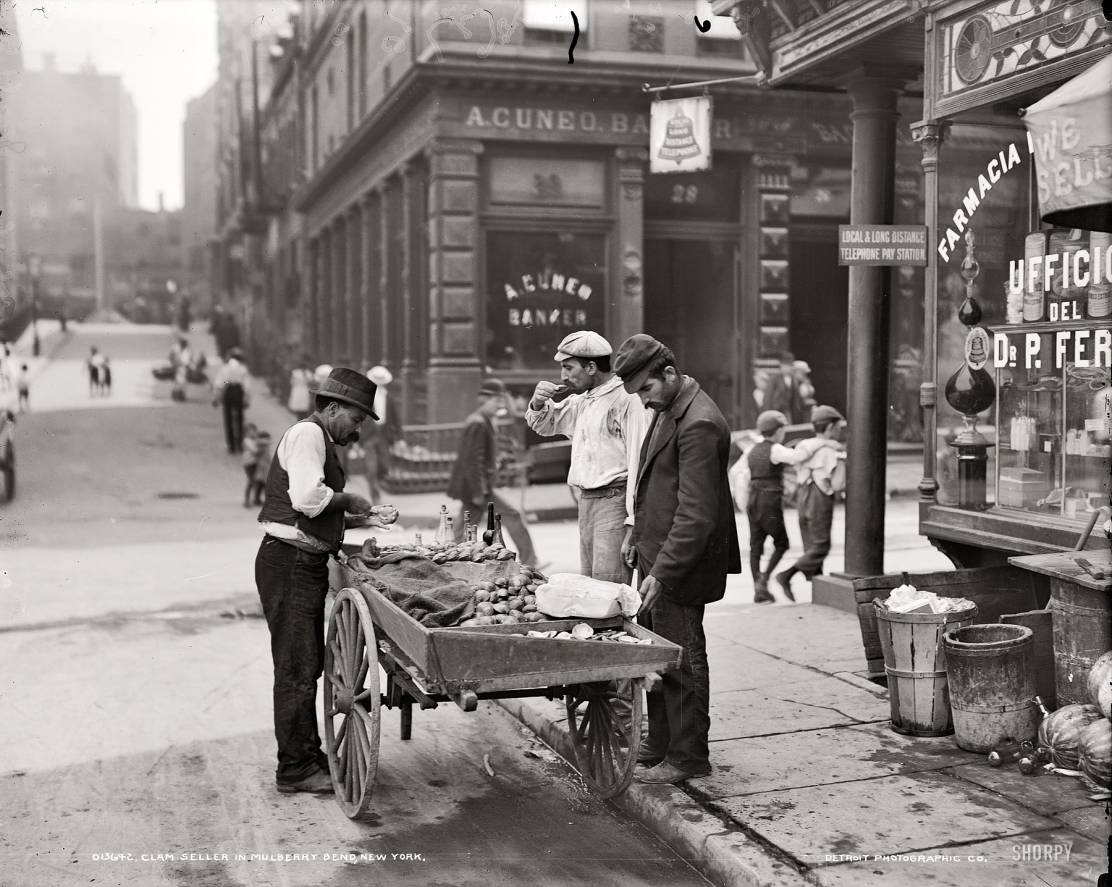
In the 19th and 20th centuries, the Bronx received many immigrant and migrant groups as it was transformed into an urban community, first from various European countries (particularly Ireland, Germany, and Italy) and later from the Caribbean region (particularly Puerto Rico, Haiti, Jamaica, and the Dominican Republic), as well as African American migrants from the southern United States. This cultural mix has made the Bronx a wellspring of Latin music, hip hop and rock.
Among these groups, many Irish Americans, Italian Americans, and especially Jewish Americans settled here. In addition, French, German, Polish, and other immigrants moved into the borough. The Jewish population also increased notably during this time. In 1937, 592,185 Jews lived in The Bronx (43.9% of the borough's population), while only 54,000 Jews lived in the borough in 2011. Many synagogues still stand in the Bronx, but most have been converted to other uses.
Between 1930 and 1960, moderate and upper income Bronxites (predominantly non-Hispanic Whites) began to relocate from the southwestern neighborhoods of the borough. This migration has left a mostly poor African American and Hispanic (largely Puerto Rican) population in the West Bronx. One significant factor that shifted the racial and economic demographics was the construction of Co-op City, built with the intent of housing middle-class residents in family-sized apartments. The high-rise complex played a significant role in draining middle-class residents from older tenement buildings in the borough's southern and western fringes. Most predominantly non-Hispanic White communities today are located in the eastern and northwestern sections of the borough.
Among these groups, many Irish Americans, Italian Americans, and especially Jewish Americans settled here. In addition, French, German, Polish, and other immigrants moved into the borough. The Jewish population also increased notably during this time. In 1937, 592,185 Jews lived in The Bronx (43.9% of the borough's population), while only 54,000 Jews lived in the borough in 2011. Many synagogues still stand in the Bronx, but most have been converted to other uses.
Between 1930 and 1960, moderate and upper income Bronxites (predominantly non-Hispanic Whites) began to relocate from the southwestern neighborhoods of the borough. This migration has left a mostly poor African American and Hispanic (largely Puerto Rican) population in the West Bronx. One significant factor that shifted the racial and economic demographics was the construction of Co-op City, built with the intent of housing middle-class residents in family-sized apartments. The high-rise complex played a significant role in draining middle-class residents from older tenement buildings in the borough's southern and western fringes. Most predominantly non-Hispanic White communities today are located in the eastern and northwestern sections of the borough.
But there are a few cities in the USA, which experienced such a precipitous drop from prosperity. For a decade after the mid-1960s, the Bronx became the scene of classic urban decay caused by crime, drug dealers, renegade landlords, and the strain of accepting wave after wave of immigrants. Irish, Italian, Jewish, and Polish gangs smuggled in most of the illegal whiskey, and the oldest sections of the borough became poverty-stricken. Puerto Ricans won political power when they elected Herman Badillo as borough president; they later sent him to the U.S. Congress. However, the reputation of the borough came not from enlightened ethnic advance but from the fires that consumed its buildings and the drug and gang wars that destroyed its young people.

The spread of slum conditions northward from Mott Haven, Hunt’s Point, and Morrisania threatened to turn the entire borough into a blighted area.
Tensions between competing populations—the borough is one-third African American, one-third Hispanic, and one-third Asian and white—have eased, and attendance at the universities in the borough has increased. The population was rising by the mid-1990s, and the upper-class enclaves of Riverdale and City Island once again ranked as sought-after housing areas for the city elite.

All in all, we can say that the Bronx is full of immigrants.
Political power has remained in the hands of Hispanic voters, but the entire borough has benefited from a historic recovery.
Various Bronx neighborhoods conduct their own community celebrations. The Arthur Avenue "Little Italy" neighborhood conducts an annual Autumn Ferragosto Festival that celebrates Italian culture. Hunts Point hosts an annual "Fish Parade and Summer Festival" at the start of summer. Edgewater Park hosts an annual "Ragamuffin" children's walk in November. There are several events to honor the borough's veterans. Albanian Independence Day is also observed.
There are also parades to celebrate Dominican, Italian, and Irish heritage.
Used resources: https://allthatsinteresting.com/new-york-immigrants-photos
https://en.wikipedia.org/wiki/New_York_City#Nineteenth_century
https://www.ny.gov/counties/bronx
https://www.britannica.com
Комментарии
Отправить комментарий